


Introduction
Togo, a West African nation of approximately 10 million people, is emerging as a notable case study in fintech development driven less by market size and more by regional financial infrastructure. According to International Monetary Fund (IMF) estimates, Togo’s real gross domestic product (GDP) is projected to grow by around 5% this year, even as GDP per capita remains near $1,340, placing the country among the region’s lower-income economies.
This combination of steady economic growth and constrained household income has made low-cost digital financial services a central component of the country’s economic development strategy. Mobile money adoption, government-led digitalization, and a newly launched regional instant-payment system are together reshaping how individuals and businesses in Togo access financial services.
The developments carry implications not only for Togo but for the broader West African Economic and Monetary Union (WAEMU), a bloc of eight countries sharing a common currency and central bank.

What Is Driving Togo’s Fintech Sector
Togo’s fintech growth has been shaped primarily by mobile money, rather than traditional banking infrastructure. Two mobile-money services, TMoney (operated by Yas Togo) and Flooz (associated with Moov Africa Togo), account for a significant share of digital financial activity in the country. These platforms enable fund transfers, airtime purchases, bill payments, and merchant transactions.
Mobile network infrastructure has proven more widely distributed than conventional bank branches, allowing mobile-money agents to deliver basic financial services in areas without physical banking access. This distribution model has been central to expanding financial inclusion in a market where formal banking penetration remains limited.
How Regional Integration Is Changing the Market
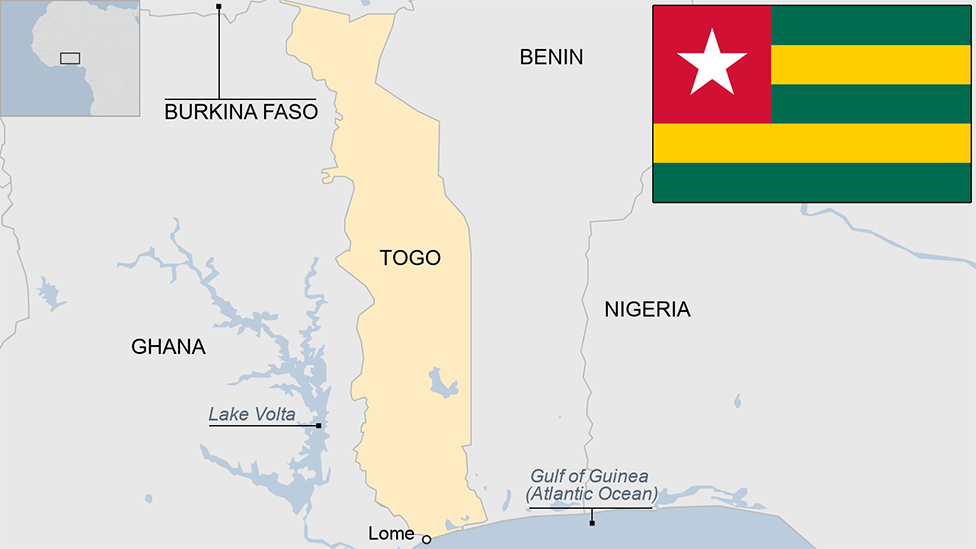
Togo does not set its own monetary policy. As one of eight members of WAEMU, it shares the CFA franc and the Central Bank of West African States (BCEAO) with Benin, Burkina Faso, Côte d’Ivoire, Guinea-Bissau, Mali, Niger, and Senegal.

On September 30 of last year, the BCEAO launched its Interoperable Instant Payment Platform (PI-SPI), designed to enable instant transfers across participating banks, microfinance institutions, electronic-money issuers, and payment providers throughout the monetary union. Togo was included among the founding member states, and the BCEAO published an expanded list of authorized PI-SPI participants this past April.
According to BCEAO’s stated objectives, the platform is intended to allow a fintech operating in Togo to reach a potential market spanning eight countries and more than 100 million people — a structural shift from the economics of building financial technology for Togo’s domestic population alone.
Fragmentation as a Structural Constraint
West Africa’s mobile-money expansion has been substantial but fragmented. Consumers frequently hold accounts across multiple providers, and transfers between different networks — particularly across borders — have historically been more complex and costly than transactions within a single provider’s ecosystem. PI-SPI is designed to address this by enabling instant transfers between providers without requiring both parties to hold accounts within the same closed network.

Key Factors Influencing Adoption
Several factors are shaping the pace and shape of fintech adoption in Togo:
- Regional trade infrastructure: The Port of Lomé serves not only Togo but landlocked countries across West Africa, and the capital hosts the headquarters of Ecobank Transnational Incorporated and the West African Development Bank (BOAD), reinforcing Lomé’s role as a regional financial hub.
- Platform-based financial services: Gozem, a company that launched as a motorcycle-taxi ride-hailing service in Lomé in 2018, has since expanded into deliveries, e-commerce, and financial services through Gozem Money. The service allows users to fund a wallet via mobile money, cash, or bank transfer, then use the balance for transfers, QR payments, and bills within the broader Gozem application. Industry observers note that this model — introducing financial services through an application already used for transportation or deliveries — may lower adoption barriers compared with standalone financial apps.
- Government digitalization programs: Togo’s Novissi program, a digital cash-transfer initiative launched during the COVID-19 pandemic, distributed emergency assistance to vulnerable citizens using mobile money infrastructure. The program demonstrated that mobile-money networks could function as social-protection infrastructure, not solely as commercial payment tools.
Costs, Impact, and Broader Implications
The expansion of digital identity, mobile-money usage, and electronic payments carries implications beyond individual transactions. A digitally verifiable identity can simplify onboarding into regulated financial services, while small businesses that receive electronic payments begin to accumulate a transaction history. Over time, that history may support access to formal credit — a pathway relevant to a population where formal credit access has historically been limited.
For merchants, successful implementation of interoperable payment systems like PI-SPI could reduce the need to accommodate multiple, incompatible payment networks. For fintech companies, shared regional infrastructure could reduce the cost of establishing individual connections with every financial institution in the union.

Risks and Limitations
Several factors remain unresolved. PI-SPI’s effectiveness depends on full implementation and adoption across participating institutions; interoperability frameworks in other regions have faced delays between formal launch and functional, widespread use. Togo’s relatively small domestic economy and low per-capita income also mean that revenue models built primarily on transaction volume may face constraints without the regional scale that PI-SPI is intended to provide.
Additionally, reliance on mobile-network infrastructure means that fintech access remains tied to telecommunications coverage and reliability, which can vary across rural and urban areas. Regulatory harmonization across eight WAEMU member states also presents an ongoing coordination challenge for cross-border financial products.
Future Outlook
Togo is not positioned to rival Nigeria or Kenya in fintech ecosystem size, nor does its growth strategy appear to depend on doing so. Instead, the country’s position within WAEMU, combined with Lomé’s role as a regional trade and financial hub, suggests a development path oriented around regional integration rather than domestic market scale alone.
The extent to which this approach translates into sustained fintech growth will depend on the pace of PI-SPI adoption across the monetary union and the continued expansion of mobile-money and digital-identity infrastructure within Togo itself.
Conclusion
Togo’s fintech development illustrates a model distinct from the venture-funded ecosystems of larger African markets. Growth has been driven by mobile-money penetration, a government-backed digital-identity and payments push, and regional monetary-union infrastructure rather than domestic market size. The BCEAO’s PI-SPI platform represents a structural shift that could extend the addressable market for Togo-based fintech companies well beyond the country’s borders, though its ultimate impact will depend on implementation across WAEMU’s eight member states.

