


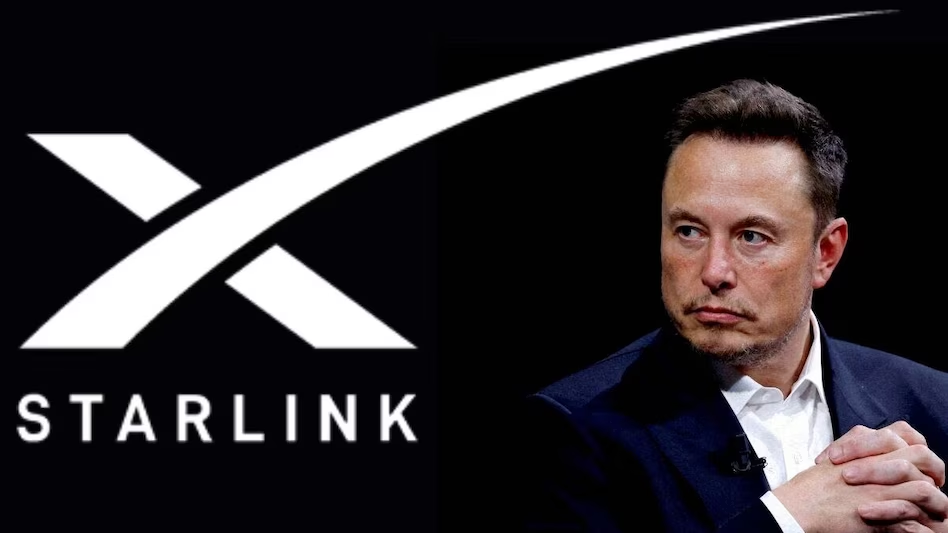
Elon Musk’s estimated net worth has surpassed the $1 trillion mark, making him the first individual to reach that level of personal wealth, according to market estimates following major developments involving his aerospace company SpaceX.
The increase in Musk’s wealth has been driven primarily by the rising valuation of companies where he holds significant ownership stakes, particularly SpaceX and Tesla. Unlike traditional income-based wealth accumulation, most of Musk’s fortune is linked to equity ownership in companies that have experienced substantial valuation growth.
Financial analysts note that billionaire wealth is often closely tied to stock prices and private company valuations, meaning changes in market conditions can significantly affect estimated net worth figures.
How Elon Musk Built His Trillion-Dollar Fortune
Elon Musk’s wealth developed through ownership positions in several technology-focused companies.
His early business success came from ventures including Zip2, a software company acquired in the late 1990s, and X.com, an online financial services company that later became part of PayPal after a merger.
The sale of these businesses provided capital that Musk later used to invest in and build companies focused on electric vehicles, aerospace, artificial intelligence, and infrastructure.
Today, the majority of his estimated wealth is connected to ownership stakes in:
- SpaceX
- Tesla
- Neuralink
- The Boring Company
SpaceX Became the Largest Driver of Musk’s Wealth
SpaceX represents the largest portion of Musk’s estimated net worth.

The company, founded in 2002, has expanded beyond rocket manufacturing into commercial space services and satellite communications through its Starlink network.
Following major valuation increases, SpaceX became the largest contributor to Musk’s wealth due to his ownership stake.
The company’s valuation has been influenced by investor expectations around:
- Commercial space launches
- Satellite internet expansion
- Government and private-sector contracts
- Future space infrastructure markets
However, private company valuations are based on investment transactions and market assessments rather than publicly traded share prices, meaning estimates can change as new funding rounds or transactions occur.
Tesla Remains a Major Part of Musk’s Fortune
Tesla remains one of Musk’s most valuable assets.
The electric vehicle company transformed from a niche automotive manufacturer into one of the world’s largest publicly traded companies by market value.
Musk’s stake in Tesla has been a major source of his wealth, with the company benefiting from growth in:
- Electric vehicle adoption
- Battery technology
- Energy storage products
- Autonomous driving research
Tesla’s valuation has also experienced periods of volatility as investors evaluate competition, production growth, profitability, and the company’s expansion into artificial intelligence-related technologies.

Neuralink and The Boring Company Add to Musk’s Business Portfolio
Neuralink
Neuralink is developing brain-computer interface technology designed to connect human brains with digital systems.
The company has attracted investment based on potential applications in healthcare and human-computer interaction.
However, the technology remains under development and continues to face scientific, regulatory, and ethical evaluation.
The Boring Company
The Boring Company focuses on underground transportation and tunnel construction.
The company was created to explore alternatives for reducing traffic congestion through underground infrastructure.
Its valuation represents another component of Musk’s broader technology portfolio, although it remains significantly smaller than SpaceX and Tesla.
Why Musk’s Wealth Continues to Increase
Ownership Rather Than Salary
A key factor behind Musk’s wealth is equity ownership.
Unlike executives who primarily receive compensation through wages or bonuses, Musk’s financial position is heavily connected to the value of companies he owns.

When company valuations rise, his estimated net worth can increase substantially.
Growth of Technology Markets
Musk’s companies operate in industries that investors view as long-term growth areas, including:
- Space technology
- Artificial intelligence
- Electric vehicles
- Digital infrastructure
These sectors have attracted significant capital as investors seek exposure to emerging technologies.
Risks and Limitations of Billionaire Wealth Estimates
Estimated net worth figures are not the same as available cash.
Much of Musk’s wealth is held in company shares and private business ownership.
Selling large portions of these assets could affect ownership structures, market prices, and company control.
Additionally, private company valuations can change based on investor sentiment, economic conditions, and future performance expectations.
Broader Economic Impact of Extreme Wealth Concentration
Musk’s rise above the trillion-dollar threshold has renewed discussions about wealth concentration, taxation, and the relationship between entrepreneurship and economic inequality.

Supporters of technology-driven wealth creation argue that successful companies can generate innovation, employment, and economic activity.
Critics focus on questions surrounding wealth distribution, taxation policy, and the influence of extremely wealthy individuals.
Economists continue to study how large-scale private wealth affects investment, markets, and economic structures.
Future Outlook for Musk’s Business Empire
The future value of Musk’s companies will depend on multiple factors, including market conditions, technological development, regulatory decisions, and business performance.
SpaceX’s expansion in commercial space and satellite communications, Tesla’s position in electric vehicles and artificial intelligence, and developments at Neuralink and The Boring Company will continue influencing the overall valuation of Musk’s business interests.
Conclusion
Elon Musk’s estimated net worth surpassing $1 trillion reflects the rapid growth of companies built around aerospace, electric vehicles, and emerging technologies.
Most of his wealth comes from ownership stakes rather than traditional income, making his financial position closely connected to company valuations.
While his businesses remain influential across several industries, future wealth changes will depend on market performance, innovation, regulation, and the long-term success of each venture.

