



The United States Personal Consumption Expenditures price index — the Federal Reserve’s primary inflation benchmark — is projected to show a significant acceleration when May 2026 data is released Thursday, according to economist forecasts compiled by Dow Jones Newswires and The Wall Street Journal.
Forecasters surveyed by those outlets anticipate the headline PCE index rose 4.1% on an annual basis in May, up from 3.8% recorded in April. If confirmed, that reading would represent the highest level since 2023, driven in part by rising energy costs tied to the Iran conflict during that period. Core PCE — which strips out food and energy prices and serves as the Fed’s operational inflation target — is projected to have climbed 3.4% year-on-year, compared with 3.3% in April.
The report carries particular weight because the Federal Reserve is scheduled to meet in July to determine its next interest rate decision. Financial markets and policymakers will scrutinise Thursday’s data as a key input into that deliberation, with rate expectations already shifting in response to a sustained period of above-target inflation.
What the PCE Index Measures and Why It Is the Fed’s Preferred Metric
The Personal Consumption Expenditures price index tracks changes in the prices paid by US households for a broad basket of goods and services. Unlike the Consumer Price Index, the PCE adjusts its weighting dynamically to reflect shifts in actual spending behaviour, which the Federal Reserve considers a more accurate representation of real-world price pressures.
The Fed has maintained a 2% annual PCE inflation target as its formal policy benchmark since 2012. Core PCE — excluding the more volatile food and energy components — is regarded by economists as the more reliable indicator of persistent, underlying inflation trends. The core index has remained above the 2% target continuously since 2021.

Thursday’s report will cover the 12-month period ending May 2026 and will be released by the Bureau of Economic Analysis.
Key Factors Driving the Projected Increase
Energy prices and the Iran conflict
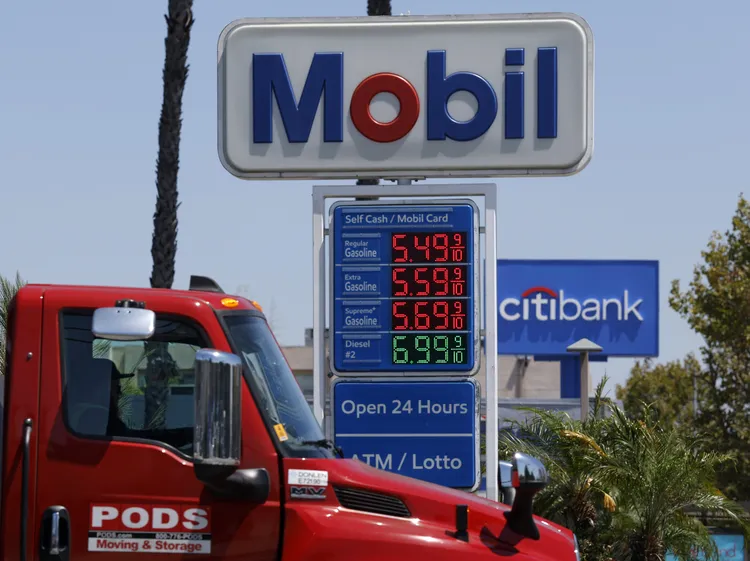
The anticipated rise in headline PCE inflation in May is largely attributable to elevated gasoline prices during that month, which analysts link to supply disruptions stemming from the war in Iran. Crude oil prices moved toward pre-war levels on Wednesday following the signing of a peace agreement and the resumption of commercial shipping through the Strait of Hormuz, the critical passage between Iran and Oman. Analysts note that the energy-driven component of the May reading may therefore prove transitory.
Tariff-related price pressures
Beyond energy, tariff-related price increases implemented in the prior year have contributed to broader cost pressures across consumer goods categories. Durable goods — defined as items designed to last more than three years — rose 3.3% on an annual basis in April, according to available data. That figure represents a notable structural departure from the pre-pandemic period, during which durable goods prices typically declined year-on-year, providing a consistent deflationary offset within the broader inflation picture.

Michael Kramer, an investment advisor at Mott Capital Management, noted in a commentary that historically durable goods prices have acted as a deflationary force within the economy, and that a permanent shift in that trend would represent a meaningful change in the inflation backdrop — one in which current Fed policy may not be sufficiently restrictive to return inflation to target.
Housing disinflation moderating
Shelter costs, which spiked sharply during the pandemic period and subsequently began cooling, had been a primary driver of the gradual decline in core inflation toward the 2% target. That downward pressure appears to be moderating. Aditya Bhave, US economist at Bank of America Securities, indicated in a published commentary that housing disinflation has largely run its course, removing one of the key offsetting forces that had previously supported the case for rate reductions.
Implications for Federal Reserve Policy
The Federal Reserve’s next rate-setting meeting is scheduled for July. As of Wednesday, financial markets were pricing in a 34% probability of a 25 basis point rate increase at that meeting, according to the CME Group’s FedWatch tool, which derives rate movement probabilities from fed funds futures trading data.
The July meeting probability figures reflect a market environment that has shifted materially from earlier in 2026, when rate cuts — not hikes — were the dominant expectation. Prior to the Iran conflict’s impact on energy prices, forecasters had widely anticipated that the Fed’s next move would be a reduction in rates, aimed at supporting a job market that had been showing signs of softening.

A stronger-than-expected PCE reading Thursday would likely increase market-implied probability of a July hike. A reading in line with or below consensus could ease that pressure, though core inflation remaining above 3% would still represent a significant distance from the Fed’s stated target.
In recent public communications, a growing number of Federal Open Market Committee members have signalled concern about the inflation trajectory and indicated that additional rate increases remain under consideration for 2026.
Risks and Limitations in the Current Inflation Outlook
Several factors complicate a straightforward reading of Thursday’s data and its implications for Fed policy.
The energy-driven component of the May headline figure may not persist. With crude oil prices retreating following the Iran peace agreement and Strait of Hormuz traffic normalising, the direct fuel cost contribution to June PCE is expected to be lower. This introduces the possibility that the May reading will prove a temporary peak rather than the start of a sustained acceleration.
However, the broadening of price increases beyond energy — evidenced by durable goods inflation and the moderation of housing disinflation — suggests that underlying price pressures are not exclusively attributable to geopolitical supply shocks. The interaction between tariff-driven goods price increases and a Fed that has maintained rates at restrictive levels for an extended period creates an analytically complex environment in which standard inflation transmission mechanisms may not apply uniformly.
Additionally, the Fed’s dual mandate — price stability and maximum employment — requires policymakers to weigh inflation risk against labour market conditions. Should employment data deteriorate concurrently with rising inflation, the Fed would face the challenge of addressing both objectives simultaneously, a scenario with limited modern precedent.
Historical Context: PCE Inflation Since 2021
The current inflation episode traces its origins to the pandemic-era demand surge and supply chain disruptions of 2021 and 2022, during which PCE inflation reached levels not seen since the early 1980s. The Federal Reserve responded with an aggressive rate-hiking cycle beginning in March 2022, raising the federal funds rate to its highest level in over two decades.
By late 2023 and through 2024, inflation had declined substantially from its peak, prompting market expectations of rate reductions. That disinflation trajectory has since been interrupted by tariff-related goods price increases and the 2026 energy price shock, resetting expectations and extending the period of above-target inflation into a fifth consecutive year.
Conclusion
Thursday’s PCE inflation report for May 2026 arrives at a pivotal moment for US monetary policy. With headline PCE forecast at 4.1% and core PCE at 3.4% annually — both above the Fed’s 2% target and above April levels — the data is expected to intensify debate within the Federal Open Market Committee ahead of the July meeting.
The extent to which the May acceleration reflects transitory energy price effects versus more durable underlying inflation trends will be central to how policymakers and financial markets interpret the report. The moderation of housing disinflation, the persistence of durable goods price increases, and the residual effects of tariff-related cost pressures all point to an inflation environment that remains structurally elevated even as some of the more acute supply-side shocks begin to ease.
The Federal Reserve has maintained that it will act as conditions require to return inflation to its 2% target. Thursday’s data will provide the latest evidence on how far that objective remains from reach.

