


Introduction
Timor-Leste’s fintech sector is developing within a new regional context following the country’s accession to the Association of Southeast Asian Nations (ASEAN) in October 2025, after a 14-year accession process. Membership places Timor-Leste inside an economic bloc of more than 680 million people, many of whom already rely on QR payments, digital wallets, and instant bank transfers as routine financial tools.
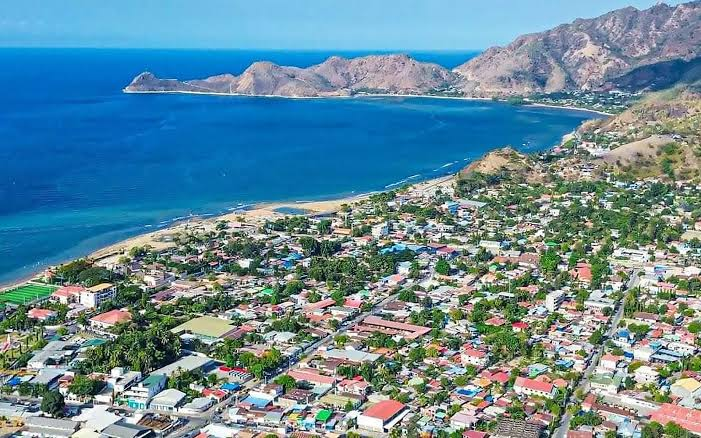
This shift matters because Timor-Leste enters the regional market from a markedly different starting point than most ASEAN members. Cash remains deeply embedded in daily economic life, formal financial inclusion is comparatively low outside the capital, Dili, and the economy continues to depend heavily on government spending financed by petroleum wealth. Financial technology is increasingly viewed as part of a broader transition strategy for the country.
The development is relevant to Timor-Leste’s approximately 1.4 million residents, particularly those outside Dili with limited access to banking infrastructure, as well as regional investors and neighbouring ASEAN economies evaluating deeper financial integration with the country.
What Financial Inclusion in Timor-Leste Currently Looks Like

Historical data indicates that only around one in five Timorese adults owned a current account, while approximately one in ten possessed a payment card. Access is also geographically uneven, with smartphone ownership considerably higher in Dili than in rural communities, and many residents required to travel substantial distances to reach physical banking infrastructure.
Commercial banks operating in the country include BNU Timor, Banco Nacional de Comércio de Timor-Leste (BNCTL), Bank Mandiri, Bank Rakyat Indonesia, and ANZ. Banco Central de Timor-Leste (BCTL), the country’s central bank, has made financial inclusion a formal policy priority since 2013, with initiatives including agent banking, children’s savings accounts, a national card, and mobile payment infrastructure aimed at extending services to low-income and previously unbanked populations.
How Mobile Money and Payment Infrastructure Have Developed
Timor-Leste’s engagement with digital finance predates its ASEAN membership by more than a decade. BNU Mobile, launched by Banco Nacional Ultramarino in partnership with Timor Telecom in 2014, became the country’s first mobile-wallet product, demonstrating how telecommunications infrastructure could extend financial services beyond conventional bank branches. T-Pay, associated with Telemor, subsequently provided a comparable telecommunications-led model, enabling mobile customers to conduct transactions through their phones.
More recently, the central bank has developed faster settlement infrastructure. BCTL operates R-TiMOR, an automated transfer system connecting commercial banks, the central bank, and the Ministry of Finance, combining real-time gross settlement with an automated clearing house. In May 2025, BCTL held the soft launch of an Instant Payment System (IPS), which the central bank describes as intended to create a faster, safer, and more inclusive payment system.

Dili-Based Digital Infrastructure vs Rural Financial Access
A structural divide exists between financial access in Dili, where smartphone ownership, banking infrastructure, and internet connectivity are comparatively strong, and rural communities, where cash-based transactions and limited connectivity remain the norm. Given that a substantial proportion of Timorese livelihoods remain connected to agriculture and informal economic activity, agent banking, USSD-based services, and simple digital wallets may prove more relevant to financial inclusion than smartphone-dependent applications.
Key Factors Shaping Timor-Leste’s Fintech Trajectory
ASEAN membership is a significant factor, giving Timor-Leste a deeper economic relationship with Indonesia, Singapore, Malaysia, Thailand, Vietnam, the Philippines, and other regional markets, while simultaneously exposing gaps in the country’s existing digital infrastructure. The Asian Development Bank forecasts GDP growth of 3.8% for the current year, accelerating to 4.1% in 2027, supported by government expenditure, investment, bank lending, remittances, and tourism.
Petroleum wealth remains a defining economic factor. Timor-Leste’s Petroleum Fund stood at approximately $18.75 billion as of May 2026, according to BCTL, and has financed much of the country’s public expenditure since independence. However, existing oil and gas resources are declining, and the long-discussed Greater Sunrise gas development remains central to unresolved debates about future energy revenue, adding urgency to economic diversification efforts in which financial services access plays a role.

Costs, Impact, and Implications for Economic Diversification
Expanded financial inclusion is linked to broader economic diversification goals. Entrepreneurs require access to payments, savings, and credit to build businesses, and without this access, private sector growth that could reduce dependence on petroleum wealth withdrawals is constrained. For consumers, instant payment infrastructure such as the IPS can make digital banking more functional; for fintech companies, it provides infrastructure upon which new products can be developed; and for Timor-Leste’s regional ambitions, modern payment infrastructure forms part of the broader ASEAN integration process.
Risks and Limitations
Timor-Leste’s fintech development faces the risk of producing two parallel digital economies: one concentrated in Dili with strong infrastructure, and another remaining largely cash-based across rural areas. Addressing this divide requires products designed around local realities of financial literacy, connectivity, and household income, rather than digitalisation pursued as an end in itself.
Additionally, instant payments, agent banking, and mobile financial services are not sufficient on their own to resolve Timor-Leste’s structural economic challenges, including continued reliance on petroleum wealth and a comparatively underdeveloped private sector. This analysis draws on data from BCTL and the Asian Development Bank; independent verification of financial inclusion statistics beyond these cited sources was not available at the time of reporting.
Future Outlook
ASEAN membership places Timor-Leste’s fintech development within a broader regional integration framework rather than a preparatory or aspirational one. Continued progress will likely depend on the pace of infrastructure expansion beyond Dili, the extent to which agent banking and mobile wallet adoption reach rural and agricultural communities, and the country’s broader success in diversifying its economy away from petroleum dependence. Industry observers suggest that fintech’s contribution to this process will be most meaningful if it extends beyond urban centres and into everyday transactions across the wider population.
Conclusion
Timor-Leste’s fintech sector is developing at a pivotal moment following the country’s formal accession to ASEAN in October 2025. Existing initiatives, including BCTL’s Instant Payment System, R-TiMOR settlement infrastructure, and long-standing mobile money products such as BNU Mobile and T-Pay, provide a foundation for expanding financial inclusion. However, significant gaps in account ownership, geographic access, and rural infrastructure remain, and the country’s broader economic diversification away from petroleum wealth will likely determine how effectively fintech can support long-term financial inclusion goals.

