


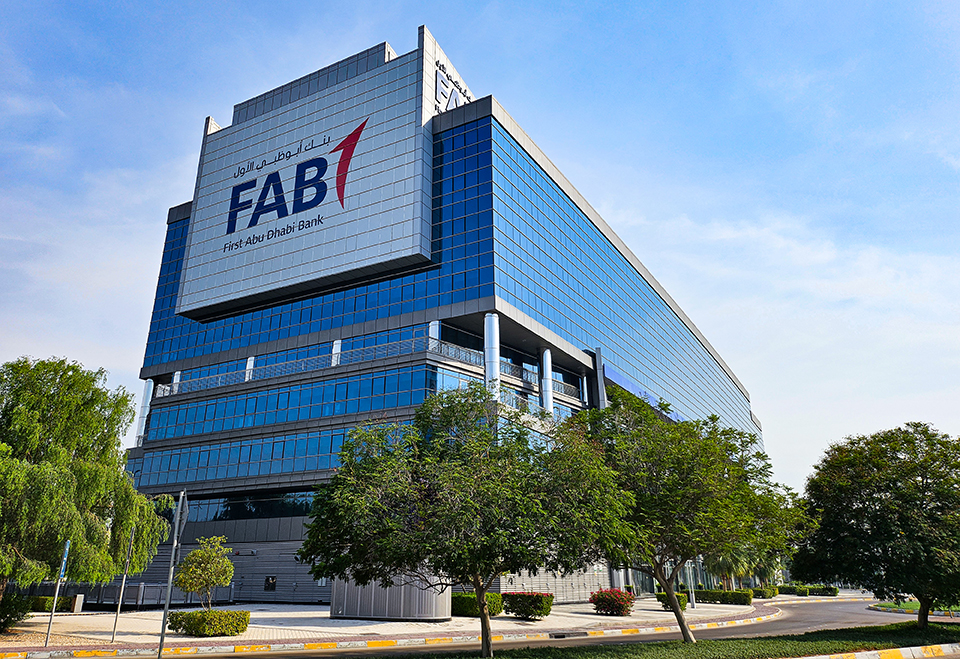
First Abu Dhabi Bank has completed live U.S. dollar transactions with Citi using tokenized deposits on Swift’s blockchain-based Ledger Minimum Viable Product, putting regulated bank money into a live distributed-ledger payment workflow.
The transaction, announced on September 2, 2026, is the first such milestone reached by a bank in the Middle East and Africa (MEA) region, according to FAB and Citi. It forms part of Swift’s initiative to test whether tokenized commercial-bank deposits can support always-on cross-border payment commitments while continuing to use established banking infrastructure for final settlement.
The development is significant because the transaction does not rely on replacing commercial-bank deposits with a new privately issued digital currency. Instead, the participating banks retain the deposits on their balance sheets while distributed-ledger technology is used to coordinate payment commitments and interbank obligations. Final settlement remains separate and uses established correspondent-banking channels.
What Are Tokenized Deposits and How Does Swift Ledger Work?
A tokenized deposit is a digital representation of money held as a deposit with a commercial bank. Unlike a cryptocurrency, the underlying value remains associated with the issuing bank’s deposit liability.
Swift’s Ledger MVP is designed to provide a shared infrastructure through which participating financial institutions can coordinate tokenized-payment activity across different networks.
Swift said in July 2026 that 17 banks from six continents were preparing to pilot live transactions using tokenized deposits for 24/7 payment availability and improved liquidity efficiency.
In the FAB-Citi transaction, the architecture involved three components:
- Existing Swift payment messaging, providing the established communications layer.
- Tokenized deposits, representing commercial-bank money digitally.
- Distributed-ledger infrastructure and smart contracts, coordinating payment commitments and recording corresponding interbank liabilities.
The important distinction is that Swift’s ledger does not take custody of the participating banks’ funds. FAB said tokenized deposits remained on the balance sheets of the participating institutions, while final interbank settlement continued through correspondent banking channels.
Why FAB and Citi Used Tokenized Deposits for Cross-Border Payments
Traditional cross-border payments can involve multiple banks, payment systems, operating hours and settlement processes. These arrangements have supported global commerce for decades but can create limitations when businesses require payment capabilities outside conventional banking hours.
Tokenized deposits introduce the possibility of representing commercial-bank money in a form that can interact with programmable ledger infrastructure.
Swift’s objective is not simply to create another payment network. Its Ledger initiative is intended to address fragmentation between different tokenized-money networks by providing an interoperability and orchestration layer.

For banks, that distinction is important. Financial institutions can explore distributed-ledger technology without necessarily abandoning existing correspondent-banking relationships and settlement arrangements.
How the FAB-Citi Transaction Was Structured
The transaction was conducted bilaterally between First Abu Dhabi Bank (FAB) and Citi in U.S. dollars.
Citi separately confirmed that the FAB transaction was its first live transaction in the Middle East under the initiative. The bank also completed a separate transaction with Singapore’s Oversea-Chinese Banking Corporation (OCBC), representing its first transaction in Southeast Asia through the initiative.
Citi said its Swift Ledger pilot is part of a controlled proof-of-concept phase running from July to December 2026.
The bank said it expects additional transactions with other participating institutions, including DBS and United Overseas Bank (UOB).
The structure is therefore better understood as an institutional pilot of interoperable digital payment infrastructure than as a full replacement for conventional international settlement.
What Changes for 24/7 Cross-Border Settlement?
One of the principal objectives is to reduce dependence on traditional payment cut-off times.
Conventional banking infrastructure often operates around defined processing and settlement windows. A distributed ledger can maintain a shared record of payment commitments continuously, allowing participants to coordinate transactions outside traditional operating hours.
Citi said the live transactions demonstrate the potential for payments that are not restricted by conventional cut-off times or weekend closures.
That does not mean every component of an international transaction becomes instantaneous.
The FAB transaction retained established correspondent banking channels for final interbank settlement. The innovation therefore concerns how payment commitments and tokenized value can be coordinated, while existing settlement infrastructure continues to perform the final movement of funds.

This distinction is important when assessing claims about “instant” or “24/7” payments.
The Difference Between Tokenized Deposits and Stablecoins
Tokenized deposits and stablecoins can both represent dollar-denominated value digitally, but they are not the same financial instrument.
A tokenized bank deposit represents a claim against a commercial bank and remains connected to the bank’s deposit relationship.
A stablecoin, by contrast, is a digital token issued under a separate structure. Its legal characteristics, reserve arrangements, redemption mechanisms and regulatory treatment depend on the issuer and jurisdiction.
The FAB-Citi transaction is therefore part of a broader tokenization trend without being a stablecoin transaction.
That distinction is particularly relevant for institutional financial infrastructure. Banks can use distributed-ledger technology while keeping commercial-bank money within the regulated banking system.
FAB’s Position in the UAE Banking Market
FAB’s participation gives the project significance in the UAE and wider MENA financial markets.
The bank operates across 20 markets, according to its corporate profile, with activities spanning cross-border liquidity, trade and investment flows.
Its balance sheet also provides context for the scale of the institution participating in the project. FAB reported AED 1.41 trillion in total assets at the end of June 2026, up 2% year to date. Customer deposits stood at AED 853 billion, while net loans and advances reached AED 661 billion.
FAB also reported a 13.7% CET1 ratio and a 140% liquidity coverage ratio at June-end 2026. Its Moody’s, Fitch and S&P credit ratings were reaffirmed at AA- or equivalent, with stable outlooks, according to the bank’s H1 2026 results.
These figures matter because tokenization experiments at a large regulated bank are different from experiments conducted solely by fintech companies or digital-asset firms. The technology must interact with existing balance-sheet, liquidity, compliance and risk-management structures.

Potential Implications for Corporate Treasury
The technology could have applications beyond individual cross-border payments.
FAB said subsequent phases of its work with Swift will examine broader interoperability, 24/7 cross-border settlement and programmable treasury solutions for institutional and corporate clients.
Programmable treasury infrastructure could potentially automate certain payment conditions, liquidity movements or settlement instructions.
For multinational companies, this could eventually affect how treasury departments manage:
- Cross-border liquidity
- Payment timing
- Foreign-currency transactions
- Intercompany transfers
- Cash management
- Settlement reconciliation
- Conditional payments
However, these are areas for future development rather than features that can be assumed to be broadly available as a result of the current pilot.
Risks and Limitations of Tokenized Bank Deposits
The introduction of distributed-ledger technology does not eliminate the risks associated with conventional financial infrastructure.
Interoperability
The financial industry is developing multiple tokenization platforms and networks. Without common technical standards, institutions could end up with separate systems that cannot communicate efficiently.
Swift has positioned its Ledger as an orchestration and interoperability layer partly in response to this fragmentation.
Regulatory requirements
Tokenization does not remove banks’ obligations relating to anti-money-laundering controls, sanctions compliance, customer due diligence, liquidity management or other regulatory requirements.
The FAB transaction’s continued use of established settlement channels demonstrates that new digital infrastructure is being introduced alongside existing controls rather than outside them.
Liquidity and settlement
A tokenized payment commitment is not necessarily the same thing as final settlement.

The FAB-Citi structure kept these functions separate, with final interbank settlement occurring through established correspondent channels.
Scalability
A successful bilateral transaction does not establish that the infrastructure can immediately support every currency, bank, payment corridor or transaction type.
The pilot phase is intended to test those broader questions.
What Comes Next for Swift Ledger?
Swift launched the Ledger MVP in July 2026, with 17 banks from six continents preparing to participate in live tokenized-deposit transactions.
Citi’s September announcement indicates that the pilot is already progressing from the initial deployment stage into live transactions involving multiple regions.
FAB said it will continue participating in subsequent phases focused on interoperability, wider 24/7 settlement capabilities and programmable treasury services.
The broader industry question is whether shared-ledger infrastructure can connect multiple commercial banks without creating another fragmented network alongside existing payment systems.
If interoperability develops across banks and tokenized-money platforms, distributed ledgers could become another layer of institutional payment infrastructure. If interoperability remains limited, the technology could remain concentrated in individual bank or closed-network applications.
Conclusion
FAB’s live U.S. dollar transaction with Citi represents a significant development in the institutional use of tokenized commercial-bank deposits.
The transaction demonstrates that distributed-ledger infrastructure can be combined with existing Swift messaging and correspondent banking arrangements rather than requiring banks to replace their established settlement architecture.
The September 2026 milestone is also part of a larger pilot involving 17 banks from six continents, with additional testing expected through December 2026.
For the UAE, FAB’s participation places a major domestic bank within the early development of this emerging infrastructure. The longer-term significance will depend on interoperability, regulatory treatment, liquidity management and whether the technology can move from controlled bilateral transactions to broader multi-bank and multi-currency use.

